
Journal
The Emptiness of Space and Its Fullness Thereof
On The Idea Of Impermanence And Human Living Expressions
4 min read
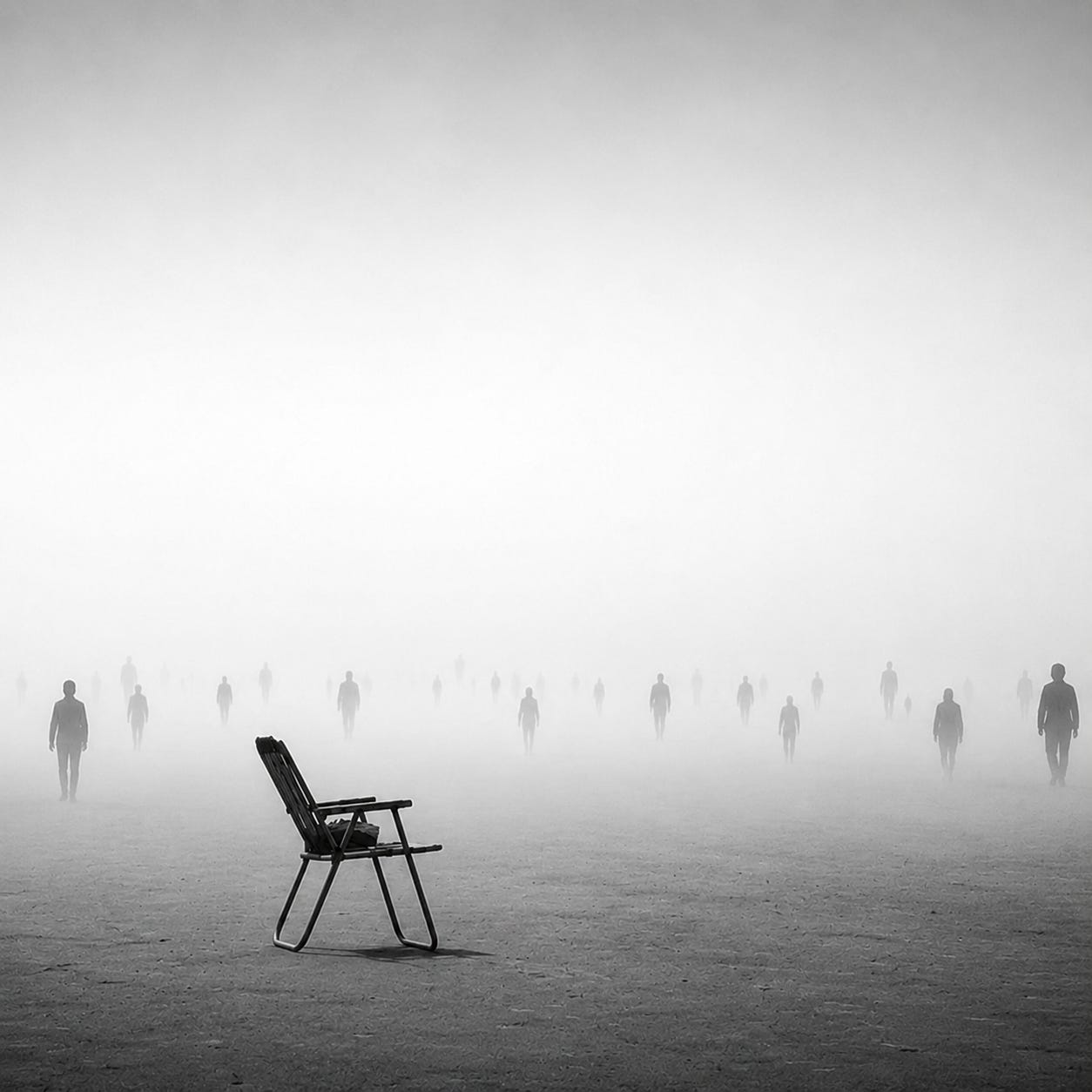
Iconic American singer, songwriter, and musician Jim Reeves once sang, “This world is not my own, I’m just passing through.” I think there is something quietly unsettling about that thought, because beneath all our language, charming desires, and dreams about legacy, impact and changing the world is the uncomfortable possibility that much of what we do will eventually disappear. No matter how significant an achievement, expression or momentary experience feels within its time, time has a peculiar way of reducing significance. The extraordinary becomes history, history becomes reference, reference becomes obscurity, and even those we insist will never be forgotten are eventually remembered without the intimacy of who they actually were.
The idea of impermanence can feel really frightening, especially when it meets a soul already embodying and nurturing an intense relationship with inner shame and guilt. If somewhere within such a relationship exists the suspicion that the soul has not lived enough, become enough, expressed enough or used itself as fully as it could have, the awareness that time is passing does not necessarily produce freedom. It can produce an ontological insecurity, an uneasiness about its own existence and what it amounts to, where the temporary nature of everything makes committing completely to experience feel strangely futile.
The soul becomes conscious that life is passing, yet that consciousness does not always make living easier. Sometimes it makes self expression more difficult, because even the desire to express self willfully becomes haunted by questions of whether it matters, whether it is enough, whether it has begun too late, or whether the self that might have been has already disappeared somewhere behind it.
And still, human beings continue to do things. We create, work, love, compete, show up, withdraw, return, succeed badly, fail beautifully and sometimes remain still for longer than we intended. There is something almost bodily about this rhythm, not entirely different from the act of eating. During the act of eating, we do not expect every meal to be magnificent, nor do we assume that eating poorly one evening means we have permanently failed at nourishment. There are periods of appetite and periods without it, meals prepared carefully and others assembled without much thought, yet when it comes to what we call performance or living, we seem less willing to allow ourselves the same irregularity.
A difficult moment or season can quietly and quickly become an identity of self, inactivity can become evidence the mind uses against the self, and another person’s acceleration can make one’s own existence appear late.
This is where time can become particularly cruel, not because time itself makes these judgments, but because we have mastered the act of using it as though it does. We attach achievement to ages, compare lives that began under entirely different conditions and construct invisible deadlines for self expression and the experiencing of life. Yet people born on the same day do not become themselves at the same pace.
Someone may arrive at their greatest expression early and spend the rest of life remembering it, while another may spend decades appearing to go nowhere before something finally takes form. Some will die before seeing what their labour became, some while standing at its height, and some without ever beginning what they imagined they would.
There are moments when all of this becomes difficult for the soul to hold, when it becomes aware of how little control it has over what will remain of its existence, and that awareness does not always create a desire to live more boldly. Sometimes it does the opposite. The soul hesitates before experiencing its desires, withholds expressions that feel deeply its own, or finds itself watching life while wondering whether entering it fully would change anything.
Unexamined inner shame can make the years behind feel wasted, inner guilt can fill them with versions of self that might have been, while the years ahead offer no promise that anything made of them will remain. Somewhere between those two stretches of time, the soul is still here, wanting, withholding, beginning, abandoning, returning, while life continues with or without its certainty.
The world existed before our performance and will continue when our part in it is finished, yet somehow we keep placing pieces of ourselves into the space between arrival and disappearance. The emptiness has always been there, and strangely, so has everything we keep trying to fill it with.